Oscar Winner Jernej Barbič Brings Monsters to Life
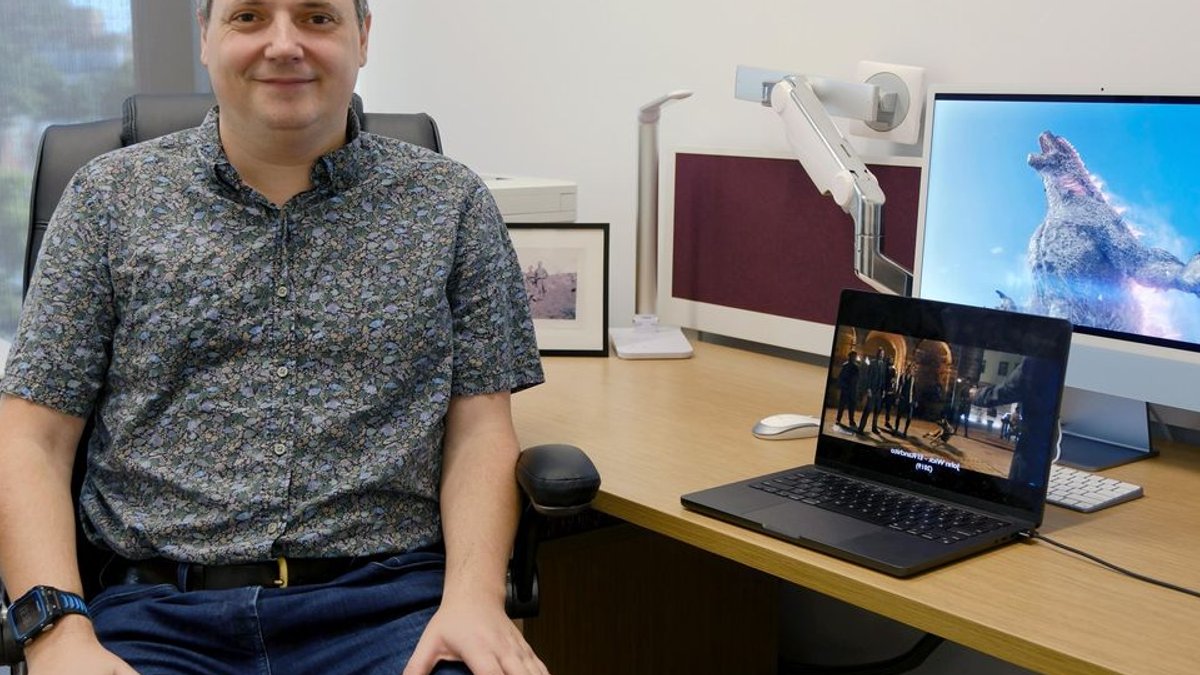
Oscar-winning filmmaker Jernej Barbič has developed a simulation software that allows him to create realistic monsters and creatures for film. The tool, known as OpenDR, uses the open-source Matterport platform to scan real objects and animate them in a virtual environment.
From Film Sets to Virtual Studios
Barbič is a visual effects supervisor and director who won an Academy Award for his work on the film Life of Pi. He has since focused on streamlining the animation process. Traditional animation can be time-consuming and expensive. Barbič wanted to find a faster way to generate complex digital characters without hiring large teams.
He built OpenDR to address this. The software takes a physical object—like a rock, a piece of furniture, or a person—and creates a digital 3D scan. This scan is then used as a base for animation. The system allows artists to manipulate these scanned objects with realistic physics.
The process starts with a Matterport camera. Barbič scans a real-world item, and OpenDR processes the data. The result is a digital replica that can be moved, rotated, and animated within a computer program.
Applying the Technology
Barbič demonstrated the software by scanning a simple object and animating it. He showed how a scanned rock could be used to create a monster. The software handles the physics of the object, so it moves naturally. This approach bypasses the need to manually model every bone and muscle of a creature.
Related: Nuclear spacecraft propulsion gets major upgrade
The filmmaker believes this technology could change how movies are made. It offers a way to create high-quality visual effects on a smaller budget. Studios could scan real props and use them as digital assets. This reduces the time spent modeling and texturing 3D objects.
The open-source nature of the project is also significant. It allows other developers to access the code and improve upon it. This collaborative approach is becoming more common in the tech industry.
Barbič is currently testing the software with different objects and environments. He plans to release more details about the system in the coming months. The goal is to provide a tool that is accessible to animators and filmmakers worldwide.
While the results look promising, the software still faces challenges. Integrating it into existing production pipelines can be difficult. Some studios may be hesitant to adopt new tools without proven reliability. However, the ability to quickly generate realistic digital assets is a strong selling point for many in the industry.

Nuclear spacecraft propulsion gets major upgrade


