NASA Backs Quantum Approach for Detecting Gravitational Waves
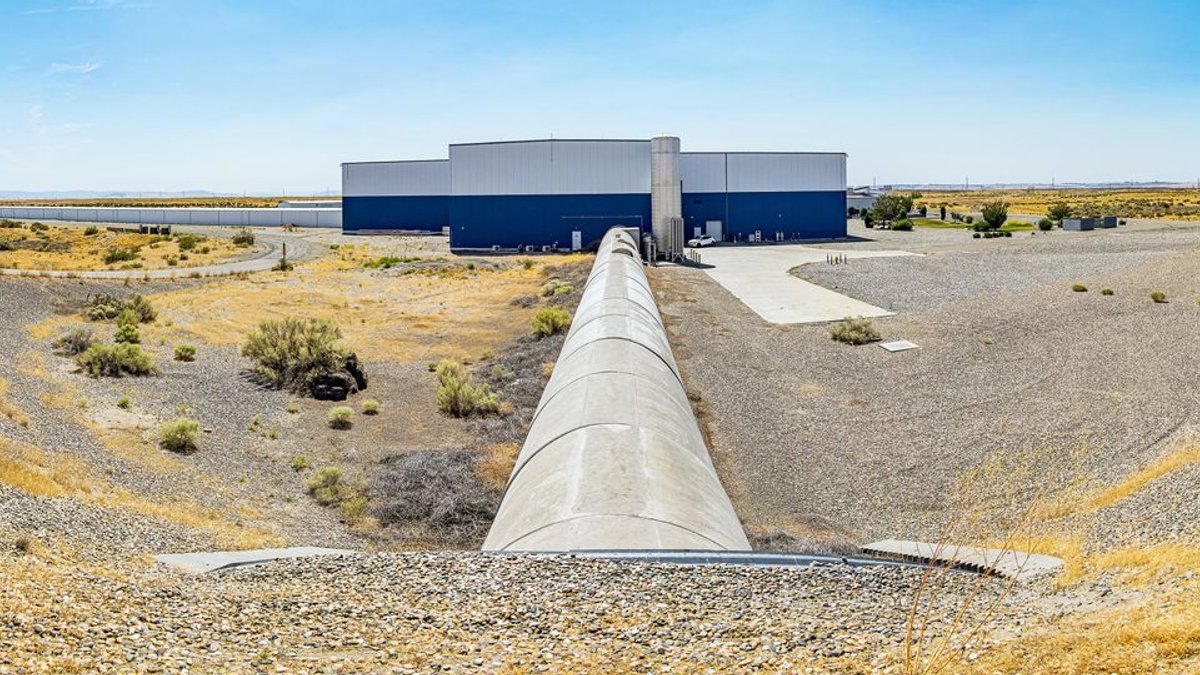
NASA has entered a new phase in its pursuit of gravitational wave detection, shifting its focus toward quantum technologies to improve the sensitivity of space-based observatories. The agency has awarded a $2.6 million contract to a private firm to develop quantum sensors for future missions. This move represents a significant step away from traditional mechanical systems toward a quantum approach for measuring spacetime distortions.
The selected company, a small business with roots in quantum physics, will design sensors that utilize quantum states to detect gravitational waves. These sensors will likely rely on techniques such as quantum squeezing or entanglement to reduce the noise inherent in measurement devices. By manipulating quantum properties, the sensors can potentially distinguish between a real gravitational wave signal and the random noise that usually masks it.
Testing in a Noisy Environment
Developing these quantum sensors is not just about theory. The company must prove that the technology can function in the harsh environment of space. This includes dealing with extreme temperatures, radiation, and the vacuum of space. The sensors will likely need to be incredibly stable to detect the tiny displacements caused by passing gravitational waves.
The physics behind the measurement is complex. Gravitational waves stretch and squeeze space itself. This effect is minuscule, causing distances between objects to change by less than the width of a proton. Traditional detectors use mirrors on the end of arms to catch these changes. Quantum sensors aim to detect the “quantum noise” that limits how well we can measure these tiny distances.
The contract specifically targets the needs of the proposed Laser Interferometer Space Antenna (LISA). LISA is a planned mission consisting of three spacecraft flying in formation behind Earth. These spacecraft will laser-link to form a giant interferometer in space. While ground-based detectors have successfully detected gravitational waves from black hole mergers, they struggle to detect lower-frequency signals that occur in space.
Quantum sensors offer a potential solution to the noise floor limitations faced by current detectors. The technology works by manipulating the uncertainty principle of quantum mechanics. This allows scientists to reduce the uncertainty in one measurement variable while increasing it in another. This trade-off effectively sharpens the sensitivity of the instrument without adding more power or hardware.
Related: Podcast Highlights Recovery Leadership Amid Cyber Breach
The funding comes as the scientific community pushes for the next generation of gravitational wave observatories. Ground-based detectors have transformed our understanding of the universe. However, space-based detectors like LISA will open up a new window onto the cosmos. They will be able to observe the mergers of supermassive black holes and the early stages of galaxy formation.
While the contract is a step forward, the technology still faces hurdles. Integrating quantum sensors into a spacecraft requires precision engineering. The sensors must be isolated from all external vibrations. Even a tiny bump or thermal shift could ruin the delicate quantum measurements. The company will need to demonstrate that the system can maintain its quantum state for the duration of a mission.
It is easy to overstate the immediate impact of this specific funding. A $2.6 million contract is relatively small in the grand scheme of aerospace engineering. However, it signals a strong endorsement from NASA for quantum sensing methods. The agency is betting that quantum technologies will be essential for the future of precision measurement in space.
As the technology matures, it could eventually find its way onto other NASA missions. Quantum sensors are useful for a variety of applications, including navigation and communications. By investing in this technology now, NASA is positioning itself to lead the next wave of scientific discovery. The ability to detect gravitational waves from space will fundamentally change our view of the universe, provided the sensors can survive the journey and the measurement.
Teen innovators are also exploring quantum sensing for their own discoveries, though the agency’s current focus remains on large-scale space observatories.

IEEE Presidents Scholarship Honors Teen Innovators


