Ancient Roman toilet reveals concrete secrets
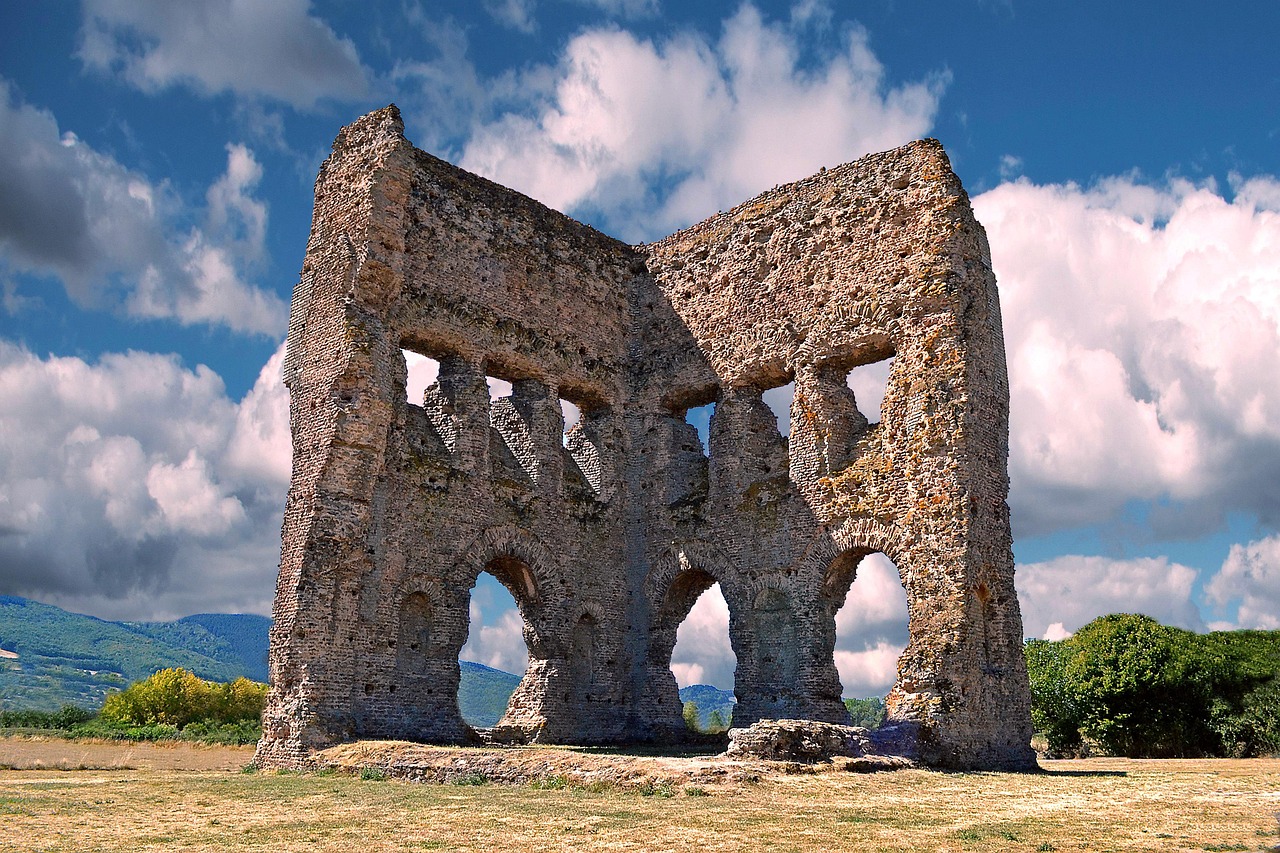
The remains of a 1,900-year-old communal latrine at Emperor Hadrian’s villa in Tivoli, Italy, provide new insights into why Roman concrete has endured for nearly two thousand years. A study in Science Advances shows how the material grew stronger long after it was poured, with calcite weaving through cracks and pores.
The latrine that outlasted an empire
The latrine, part of Hadrian’s second-century estate 27 kilometers east of Rome, has withstood centuries of weathering. Its concrete walls, never restored, offered scientists an undisturbed record of the material’s evolution.
“Nobody restores a latrine,” said Paulo J.M. Monteiro, a civil engineer at the University of California, Berkeley and the study’s senior author. “The material sat undisturbed for nineteen centuries, conducting an experiment no modern lab could replicate.”
A group led by Xiaohong Zhu of Beijing University of Technology used high-resolution X-ray imaging, electron microscopy, and chemical analysis to examine the concrete’s structure at nanoscale levels. Their scans uncovered a network of calcite filling pores and binding the material. This process, called carbonation, happens when carbon dioxide from the air reacts with calcium-rich compounds in the concrete.
An X-ray scan and 3D reconstruction of a tiny fragment revealed calcite forming detailed patterns inside the concrete. The results indicate carbonation contributed more to the material’s durability than previously recognized.
Related: Deextinction Debate Overshadows Key Conservation Issues
From ancient chemistry to modern challenges
Roman concrete’s longevity comes from its mix of lime and volcanic ash, which triggered lasting mineral reactions. In 2023, researchers suggested lime clasts—white chunks once thought to be mixing flaws—might explain the concrete’s ability to heal itself. When cracks appear, water dissolves calcium from the clasts, which then recrystallizes as calcium carbonate to seal the damage.
The latest findings expand on that theory, demonstrating how carbonation strengthened the material over time. “Calcite had been suspected as an important binding phase in inland Roman concrete before,” Monteiro said. “What is new is that we can now see how it binds.”
The research could also aid conservators working to preserve ancient structures. By understanding how Roman concrete naturally improved over time, they might avoid disrupting those same processes during restoration.
The latrine’s walls still stand after nearly two thousand years.
No modern material has matched this achievement.

Deextinction Debate Overshadows Key Conservation Issues


