Security leaders dig deeper at Black Hat 2026
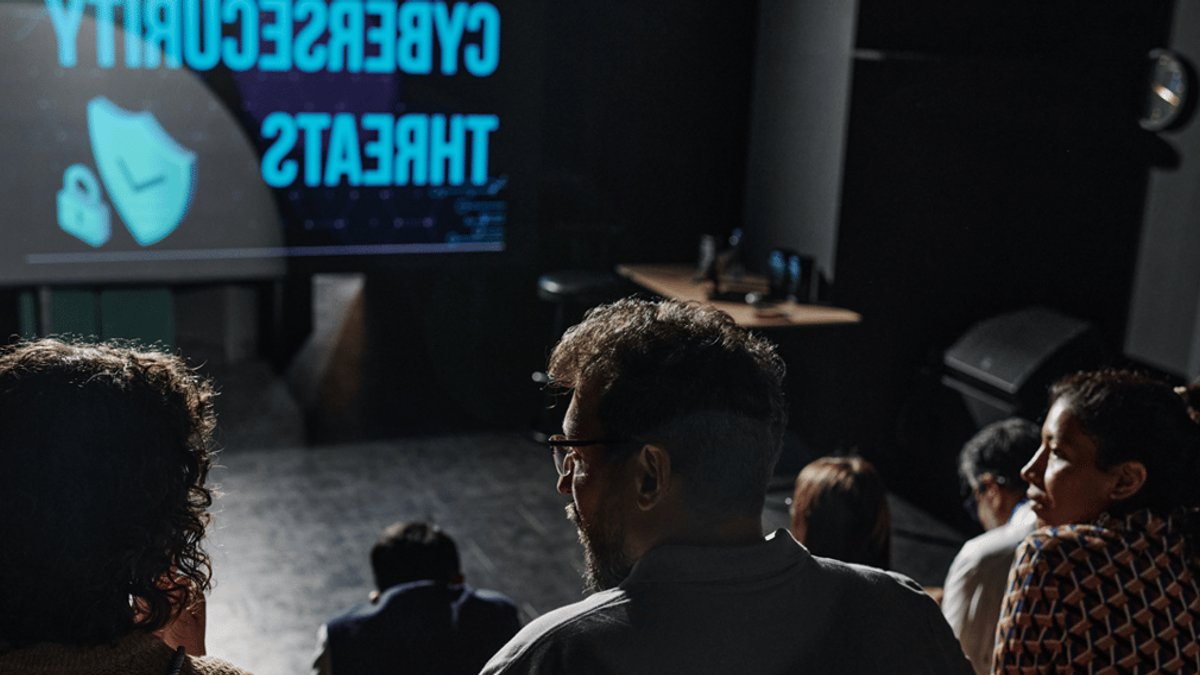
The cybersecurity industry gathered in Las Vegas for Black Hat USA 2026, one of the year’s largest security conferences. The event, held each August, brings together security researchers, CISOs, vendors, and government officials. Attendees use the gathering to see what commands industry attention and where security investment is headed next.
Artificial intelligence dominated the event, with a dedicated AI Summit and a new AI Zone. Signs and partner booths featured AI messaging at the airport. Julie Talbot-Hubbard, vice president of security services at AHEAD, noted that AI is everywhere. Chase Cunningham, chief strategy officer at Demo-Force, described the technology as having annexed the conference. He said you cannot walk 20 feet without encountering agentic or AI-powered products.
The volume of AI messaging has created a challenge for security leaders. They must separate meaningful advances from marketing claims. Cunningham observed that products previously doing fine without those words now attach them. Despite this flood of AI announcements, the tone has shifted. There is less focus on AI’s potential and more on the operational challenges of deployment.
Related: CIOs Seek Strategies to Tame AI Model Churn
The conversation feels more mature this year, Talbot-Hubbard said. Diana Kelley, CISO at Noma Security, agreed. People are moving past the hype to focus on the hard operational questions. They are identifying, governing, and securing the AI systems entering the enterprise. This includes agents, identities, permissions, and the infrastructure that supports them. Kelley noted there is much less patience for generic “AI-powered” claims.
Organizations are looking beyond individual products. They want to know if they have foundational capabilities to support AI securely. This includes identity controls, visibility, governance, and resilience. The most positive surprise for some attendees was how practical the AI conversation has become. Leaders are focused on provable controls and whether products work in complex environments.
The challenge of the attack surface
Despite the focus on AI, attendees returned to longstanding security challenges. AI is a security tool, but it also accelerates attackers. The concern is not that cybercriminals will develop entirely new techniques. Instead, AI allows them to operate more efficiently. Cunningham pointed to offense getting cheaper, faster, and easier to scale. AI can accelerate reconnaissance, vulnerability analysis, exploit development, social engineering, and credential abuse.
Kelley noted that AI is compressing the time between discovery and exploitation. Organizations continue to manage existing security debt, including overprivileged identities and software supply chain exposure. As enterprise architectures grow more complex, the risks expand. Mangin described the attack surface as bigger and more interconnected. Attackers are looking for gaps between enterprises, platforms, AI systems, and infrastructure.
Related: Ancient Humans Likely Spoke 10x More Languages Than Today
Security leaders emphasize core practices despite these changes. AI is an accelerant, not an exemption from doing the fundamentals. Cunningham said the need for strong identity controls, least-privilege access, monitoring, segmentation, and recovery planning remains. The challenge for enterprises is moving quickly to capture AI’s benefits while avoiding risks from deploying new capabilities without sufficient controls.
Mangin described an ongoing imbalance between attackers and defenders. Cybercriminals can experiment and adapt without the same policies and governance requirements that enterprises must follow. This naturally puts enterprises on the back foot. The pressure is greater on the security decisions they do make. This pressure is what motivated many IT leaders to attend Black Hat USA 2026.
Attendees sought a sharper read on security leaders’ priorities for the next 12 to 24 months. They wanted to understand the gap between strategy and execution. Talbot-Hubbard emphasized the importance of connecting first-hand with the industry to compare notes. The best outcome is insights that help organizations make better decisions with more confidence. Others came to deepen and widen their view. No one company sees the entire picture, but the conference offers a chance to understand what is happening beyond their direct view.

CIOs Seek Strategies to Tame AI Model Churn


