Apple Watch Heart Sensor Ties Garmin in Tests
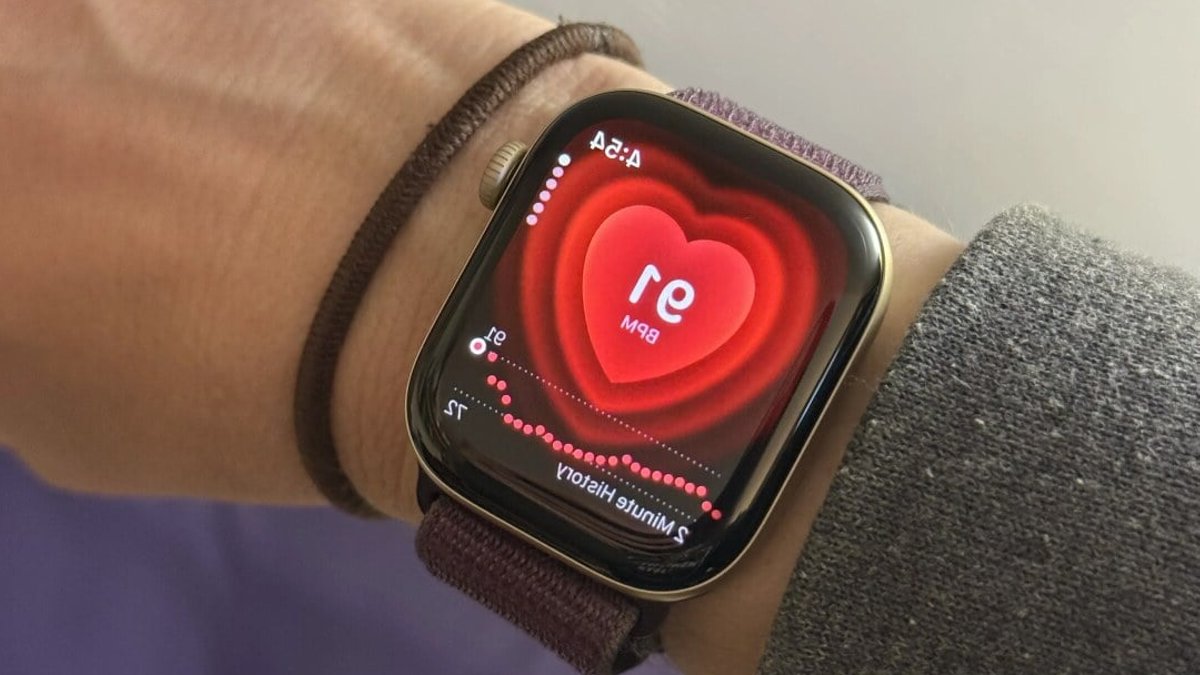
A tech reviewer who regularly benchmarks fitness trackers against a chest-strap reference device recently tested the Apple Watch Series 12 and Ultra 4 to verify Apple’s claim of “the most accurate heart rate in a wearable.” Over the past week, the reviewer subjected the new sensors to intensive testing to assess their performance.
A History of Missed Beats
The reviewer has spent years comparing optical heart rate sensors in wearables against chest straps, uncovering unexpected results. For example, the Powerbeats Pro 2 often failed with users who had small ears, while the Garmin Forerunner 570 outperformed all other devices tested at the time. That same sensor now appears in Garmin’s Forerunner 970, as well as the latest Fenix and Venu models.
Apple’s performance has varied. Early models like the Series 4 competed well with the Whoop 3.0 in 2019, but newer releases fell behind as competitors improved. The Series 10 and Series 11 ranked in the lowest tier of tested sensors, while Garmin’s Forerunner 570 earned top marks. Devices like the Pixel Watch placed in the middle tier.
After calling recent Apple Watch sensors “mid at best” on Reddit, the reviewer faced criticism but defended the assessment based on accumulated testing data.
Read Also: Discord To Use Automated Age Verification Instead of ID Scans
Testing the New Sensor
For this evaluation, the reviewer wore the Series 12 on one wrist and the Garmin Forerunner 570 on the other during various workouts. Both devices followed manufacturer placement guidelines, with a chest strap providing reference measurements. The tester, who has light skin and no wrist tattoos, ensured optimal signal conditions for both sensors.
Workouts included treadmill runs, trail runs, rowing, and strength training—some with rapid heart rate fluctuations, others with steady rhythms. Activities involving equipment like dumbbells or rowing handles were included because gripping can disrupt sensor accuracy.
Initial results showed both devices performing well, though with distinct flaws. The Garmin occasionally lagged at the start of high-intensity intervals before correcting, while the Apple Watch avoided that delay but sometimes missed peak values during sharp spikes. The first round ended in a tie.
Further testing confirmed these patterns. The Garmin missed the beginning of heart rate spikes, while the Apple Watch dropped data points entirely, particularly early in sessions.
A gym session with three mini-workouts revealed clearer differences. During the treadmill run, both devices performed similarly with minor errors. In the rowing interval, the Garmin struggled significantly, missing nearly half of the second interval. The Apple Watch overestimated values in some areas and failed to capture the lowest readings between intervals.
Read Also: Counter-Strike 2 Update Adds 3v3 Rush Mode
The strength workout posed challenges for both. The Garmin frequently read low, while the Apple Watch sometimes read high and recorded fewer total data points. Scatter plots of individual readings reinforced these disparities.
Reviewing the full dataset, the Series 12 showed marked improvement over the Series 10 and 11. While Apple no longer lagged in accuracy, doubts persisted about its claim of being the single most precise wearable. The Garmin Forerunner 570 still delivered near-perfect readings on its best days—a level the Apple Watch had not matched. Though the Apple Watch competed closely with Garmin’s top sensor, it occasionally missed startup values, overestimated readings, failed to capture low values during quick transitions, and produced sparse data in some charts.
Comparing the Sensors Side by Side
Scatter plots from the strength training session reinforced earlier findings. The Garmin consistently read low, while the Apple Watch sometimes read high and omitted data points it deemed unreliable. The tester noted that the Apple Watch appeared to withhold values it could not confidently measure, explaining the gaps in its charts.
Apple’s Claim Under Scrutiny
The reviewer questioned whether omitting uncertain data points constituted higher accuracy. If one device skips a reading while another reports an incorrect value, the first may appear more accurate in analysis. Still, the Apple Watch’s data gaps raised concerns about its claim of being the most accurate wearable sensor.
Read Also: Microsoft ends support for Calendar, People, Files companion apps
Additionally, the tester argued that chest straps remain more accurate than any optical sensor in a watch. Excluding them from comparisons would make Apple’s claim incomplete.
Study Design and Accuracy Claims
Apple redesigned the optical heart rate sensor in the Series 12 with larger LEDs arranged in a tighter circular pattern. To support its claim of having the most accurate sensor on the market, Apple published a study comparing seven competing devices across various workout types. However, each device and workout pairing received only a single summary number, without revealing how sensors performed during actual use.
The published data provided limited insight into real-world accuracy or meaningful comparisons between devices. The tech reviewer conducting independent tests acknowledged being one person, making the results a small and informal study. Testing included treadmill runs, trail runs, rowing, and strength sessions with the Apple Watch Series 12 and Garmin Forerunner 570, using a chest strap as a reference.
Workouts were chosen to include rapid heart rate changes and activities involving gripping equipment, both known to affect sensor accuracy. Tests were performed under varying weather conditions, as ambient light and temperature can influence readings. The reviewer ensured proper fit and positioning for both devices, aiming for consistent and reliable results.

Discord To Use Automated Age Verification Instead of ID Scans


