NASA’s Canadarm Named 300th IEEE Milestone
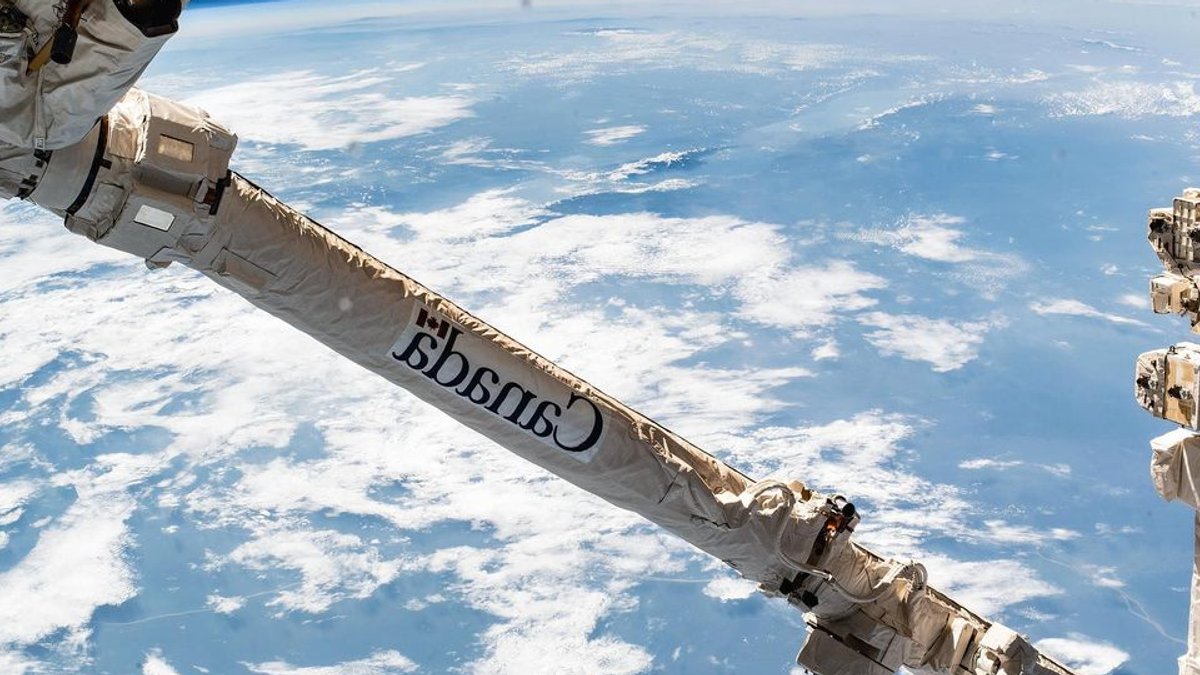
NASA’s cargo-moving robotic arm has been named the 300th IEEE Milestone, recognizing its decades of service in space operations. The designation honors the technology’s impact on aerospace engineering and its role in missions ranging from satellite deployment to space station construction.
The IEEE Milestone program recognizes significant technical achievements that have had lasting impact on society. The system has been a fixture aboard space shuttle orbiters and the International Space Station since the 1980s. Its precision and reliability have made it essential for tasks too risky or impossible for astronauts to perform during spacewalks.
Technical Design and Capabilities
The arm’s design allows astronauts to capture, position, and release payloads in orbit with sub-inch accuracy. Operators guide the mechanism through a series of manual controls, manipulating joints that can extend up to 50 feet when fully deployed. The system uses a series of cameras to help crew members handle delicate equipment without damaging it. These cameras include a high-resolution video camera at the end of the arm, along with additional cameras positioned on the arm and the orbiter’s payload bay to provide a full view of operations.
The force-sensing technology employs load cells in the arm’s wrist and shoulder to monitor the amount of force applied during maneuvering. This feedback helps operators adjust their inputs to prevent overstressing the payload or the arm itself. The arm’s control software also provides visual cues to enhance operator awareness and control.
Over the years, the technology has undergone several upgrades to improve its strength and range. One key improvement was the addition of a laser tracking system in the late 1990s, which allowed operators to target the arm’s “gripper” using a laser pointer. This enhanced the arm’s precision and reduced the workload on operators. Another upgrade was the development of an autonomous mode, which allowed the arm to perform tasks independently, freeing up crew members for other tasks.
Related: IEEE President Calls for Tech Advancing Social Good
The arm’s modular construction allows individual components to be replaced during routine maintenance operations. This design enables engineers to update or replace specific parts without having to overhaul the entire system. Furthermore, the arm’s adaptability has allowed it to be used across various spacecraft platforms, including the Space Shuttle, the International Space Station, and even on the ground for testing and training purposes.
Operational Legacy
The robotic system has supported hundreds of missions, including Hubble Space Telescope servicing flights and assembly of ISS modules. In 2008, the arm played a key role in repairing the Hubble Space Telescope’s failed power control unit, extending the telescope’s life and enabling it to continue making new observations. The arm also played a role in inspecting and repairing the International Space Station’s ammonia leak in 2012.
During the assembly of the International Space Station, the robotic arm was instrumental in connecting modules, moving equipment, and facilitating spacewalks. It has also supported the deployment and retrieval of satellites and other spacecraft, as well as the capture and berthing of visiting vehicles, such as commercial cargo and crewed spacecraft.
IEEE representatives indicated the milestone reflects not only the engineering achievement but also how the technology shaped future robotic systems for space and Earth-based applications. The recognition places the arm among other historic inventions in computing, telecommunications, and power transmission that received IEEE honors over the past several decades. Engineers at the organization have long championed projects advancing social good, and this latest milestone aligns with that tradition of celebrating technology that serves humanity.

New Standards Boost Safety for Robot Cable Carriers


